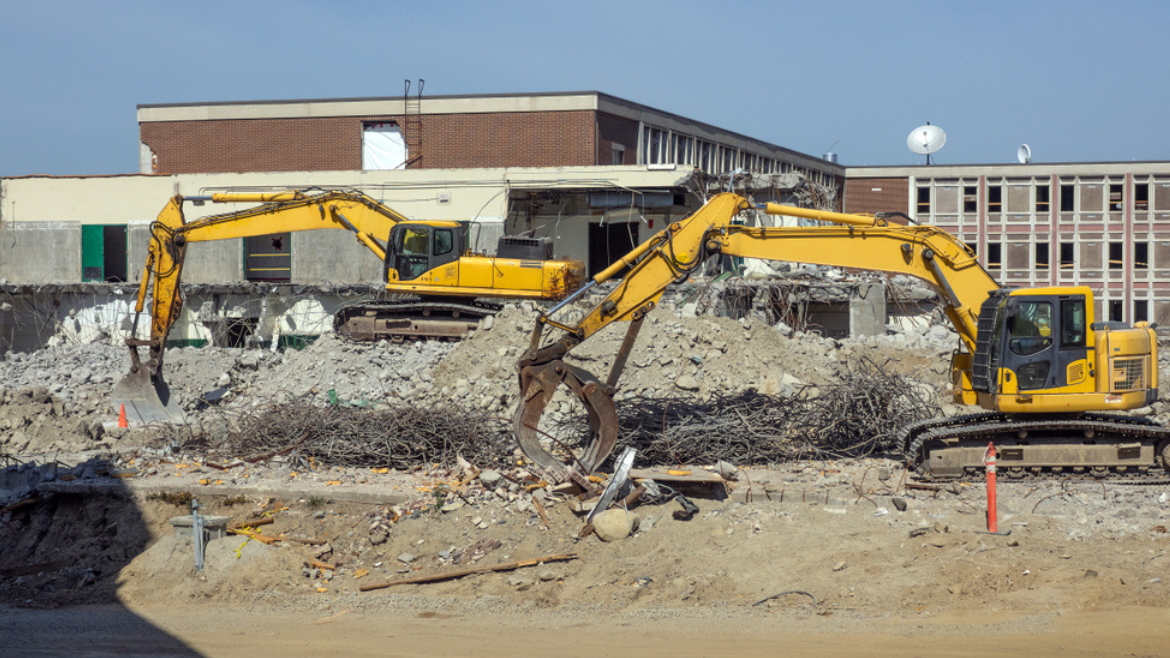
Saving the Environment: Demolition versus Deconstruction
An estimated 200,000-300,000 structures are demolished each year in the United States and this contributes over 90 percent of the total waste from both construction and deconstruction, averaging around 30 million tons annually, (Zaman 2018).
If more of these demolitions could be transformed into deconstruction projects, not only would we be able to significantly lower the landfill waste, we would also be able to provide construction materials in a sustainable manner; limiting our resource consumption and wastage.
In fact, it is estimated that out of every three square feet of structural deconstruction, one square foot of lumber can be salvaged for new construction (Boulder County cites the Deconstruction Institute). Therefore, if each of the two hundred to three hundred thousand homes currently being demolished in the United States each year were deconstructed, we would be left with enough reclaimed lumber for approximately 100,000 new homes. That would save a lot of trees.
Brad Guy, president of the Building Materials Reuse Association, estimates that deconstruction and re-use currently recapture only about .2 percent of the total construction demolition waste stream.
What does each one entail?
Demolitions
Demolition is simply the act of taking down a building or structure. This can be done in many ways, but usually involves large pieces of construction equipment (backhoes, bulldozers, excavators, etc.). It can also include breaking up concrete (parking lots, walkways, ramps, foundations), tearing out piping for plumbing, and other activities.
The main goal is to remove a structure, clearing the way for new construction or infilling the land. (Demolition is also sometimes referred to as “wrecking,” though this is a somewhat older term.)
Demolition is often preferred when working with a tight budget or a strict project deadline. Knocking a building down is quicker than dismantling and it requires less manual labor. It allows a project site to be cleared quickly, and can contribute to a more efficient construction process.
Demolition, however, presents a challenge for recycling and sustainable construction. Rubble can be collected and processed into construction products like aggregate, road base or crusher dust, but the demolition process is less discriminatory and there is a high probability that potentially recyclable materials are mixed with untreatable or hazardous waste.
Deconstruction
Deconstruction is a slower process where the material is stripped a piece at a time to try and reclaim it before taking down the structure. Materials are either preserved for future use or broken down and recycled.
Deconstruction has gained national notice only in the past few decades, fueled by the demand for cheaper building materials and increased public consciousness about recycling and environmental impact. While there were only a few companies doing deconstruction back in the 1990s, there is now an entire industry devoted to it.
Deconstruction, or ‘unbuilding’, uses labor and sometimes mechanical equipment to disassemble structures and salvage building materials, firstly for reuse and secondly for recycling. Some of the key materials that can be salvaged and recycled for future use include:
- bricks and concrete
- terracotta tiles
- wood products like trusses, framework and floorboards
- good quality fixtures and fittings.
- doors
- lighting fixtures
- appliances
- hardwood flooring
- cabinets
- windows
- countertops
- wall studs
- nails
- concrete
- joists
- piping
- wiring
- plumbing fixtures
It involves taking a building apart piece by piece, essentially reversing the order of its construction.
Deciding on Whether to Demolish or Deconstruct
Materials are materials, and a good number of the materials used in home construction can be recycled. One expert in-home demolition estimates that roughly 75% to 90% of the materials in an average house can be reused or recycled. This is true whether the materials are stripped out in deconstruction, or gathered, hauled, and recycled as part of a turnkey demolition.
Whether demolition or deconstruction is the best option depends on several factors:
Time and cost: What is the project timeframe? How will deconstruction affect timelines, and how will demolition and disposal affect project costs?
On-site health and safety: How big the site is: will heavy machines be able to maneuver? What type of structure is involved? Does it contain hazardous materials, or an abundance of recyclable materials?
Company reputation: Could an environmentally-savvy waste disposal strategy, which includes salvaging materials, improve your company’s reputation in the eyes of customers and industry partners?
The environment: What type of impact will your company have on the construction industry, and the environment, by choosing either to demolish a building or salvage its materials?
The choice between demolition and deconstruction is ultimately based on how these factors impact a project; however, the economic and environmental benefits of recycling has shifted the way we think in the construction industry. Construction and development will always generate waste, but it’s become increasingly important to consider how much waste we generate and what we do with it.
Although deconstruction can add anywhere from several days to several weeks to a project’s schedule, the up-front investment in time and labor can yield savings at the end of the job. “When you look at the math, it works out to be more favorable [than demolition]. And people are beginning to understand that paying more up-front saves them money in the long run,” says Juli Kaufmann, co-founder of Milwaukee, Wis.-based green building firm Pragmatic Construction, which has just added deconstruction services to its portfolio.
How Home Insurance Helps
Before you make a choice, make sure that you are aware of your homeowner’s insurance coverage. This will help you know what future situations related to demolition or deconstruction, can be covered by your insurance. If your current insurance plan is not enough to cover any future liability, explore the option of hiring a liability insurance professional.
Environmental Issues to Consider – on Demolitions
According to the EPA, there are over 2,600 landfills in the United States. Landfills comprise one of the biggest contributors to soil pollution. Much of the waste in these landfills is “C&D” (construction and demolition) waste. The EPA estimates that 600 million tons of C&D debris were generated in the United States in 2018—more than twice the amount of generated municipal solid waste (i.e. what we think of as garbage services).
And of that C&D debris, only 10% comes from construction. The other 90% was—you guessed it—from demolition activities.
It’s no wonder that deconstruction has caught on. That said, there are responsible ways of doing demolition, too. With proper planning, recycling, and abatement, a demolition project can minimize what goes into our landfills, too.
Environmental Issues to Consider – on Deconstructions
Deconstruction significantly reduces the amount of construction waste that goes to landfill. This is important because construction and demolition are major landfill contributors. According to the National Waste Report 2020, 3,137 kilotons of masonry materials generated from construction and demolition went to landfill in 2018-19. Construction and demolition overall contributed 27 million tonnes of waste, or 44 per cent of the total core waste generated in the same period.
Deconstruction, however, requires a greater time investment than demolition. According to the NSW Environment Protection Authority, deconstruction takes 55-60 per cent longer than demolition. This is because recyclable materials need to be removed and separated, and materials that can be sold for reuse must be handled carefully to ensure their quality for the next project. This often requires more labor time and specialized machinery, which can impact project timelines.
Companies can save on the significant disposal and transport costs associated with sending waste to landfill, while conserving landfill space and extending the life of landfills.
Salvaging recyclable building materials reduces the demand for raw material and resource extraction.
Material Savings and Time Issues to Consider – on Deconstructions
Deconstruction does keep material out of landfills. It also reduces carbon dioxide production from the manufacture of new materials. It is a particularly good option if what is coming down in a home or office might have reusable materials. However, that only covers a portion of all demolition projects.
There are two drawbacks to deconstruction, however. First, it takes time. It requires a lot of careful labor to remove items like molding, windows, and stonework, and much of this has to be done by hand. Second, it tends to cost more up-front—again, because of the time and labor involved.
How Turnkey Demolition Can Include it All
There are times when deconstruction is not possible, or when the materials that could be extracted do not justify the costs. For these kinds of projects, a more traditional demolition approach is needed. But demolition itself can be done in different ways. It is best to find an environmentally conscious demolition company (like us – Norita Contractors) to handle all aspects of the demolition and ensure that less material ends up in the landfill.
Whenever we come to scope a project (and we take pride in scoping thoroughly), we try to determine answers to questions such about:
- Permits: Which permits are needed? What needs to be done to stay in compliance with local ordinances?
- Space: How much room is there for machinery? What is access to the site like?
- Protection of the area: Are there trees or landscaping that need to be protected? Other buildings or units? How densely populated is the area?
- Safety: What is the current condition of the structure? What is the risk of falling debris or structural collapse? Are there any toxic materials on-site? Is hazardous material abatement needed?
- Utilities/turn-off: Is there electrical, gas, or water service running to the structure? If so, have they been turned off? At what point? Will pipes or wires need to be reclaimed?
- Timeline: How quickly must the project be completed? Are there other projects with timelines that depend on the completion of the demolition?
- Materials: What are the types and amounts of materials involved? Though many materials can be reused or recycled—people are often surprised at just how many!—many cannot because of their composition or lack of durability. Even for material that can be reused or recycled, it is worth asking if there is enough to justify the cost of extracting it.
- Economy: Deconstruction can help the economy. Providing recycled alternatives can create more jobs and lower the cost of building materials for the community.
The hidden benefits of deconstruction:
Apart from the financial perks, deconstruction, if we can say so bluntly- is simply the right thing to do. The benefits are both local and far-reaching, from tax write-offs and limiting landfill costs, to supporting local non-profits and reducing the need to import virgin resources. If deconstruction is well planned into the project, the additional days or weeks that it adds will be simultaneously profitable, socially conscious, and environmentally sustainable.
As all US States reinvent their neighborhoods, it is important to realize how these transitions can be critical times of growth, not just aesthetically, but also socially–by supporting our local non-profits, creating jobs, and sustainably sourcing materials. In your remodel or renovation, please choose deconstruction.
Conclusion
Sustainability awareness has rapidly changed the way we think about demolition. What was once a sector dominated by heavy machines and piles of rubble is now a space where we think more strategically about the salvageable materials and our impact on the environment?
Companies that deconstruct buildings and recycle materials gain goodwill and can market their sustainable approach to environmentally aware customers and investors.
Recovered materials are mostly reclaimed usually by nonprofits that focus on landfill diversion and materials reuse. With tax benefits, materials that are donated to non-profit organizations, make such cost eligible for tax deductions, which can be claimed by either the homeowner or the contractor.
For Norita Contractors, a walk-through of renovation projects early in the planning stages is necessary so we can estimate deconstruction fees as well as evaluate the materials. “Sometimes we can show customers that the tax savings the owner will earn will total enough to offset some of the cost for our services, and thereby the net cost of that general contractor’s demo line item could be zero,” our founding partner says.
But is reclaiming these materials realistically worth the additional time and money of deconstructing an entire building? There is no doubt that initially, demolition is the quicker, less expensive option for removing a building. However, many case studies have shown that demolition is only initially less expensive, (Schwartz “Pro Tips: Salving on Remodeling Costs with Deconstruction and Salvage” and Hometown Demolition).
Although the cost of a demolition project might be half the cost of hiring a deconstruction team, the items salvaged during deconstruction are often appraised at tens of thousands of dollars (or more in value), and then our customers can see returns on your initial investment.
Now kindly fill in our contact form and let us know what demolition/Deconstruction project you would like us to quote you on.
Items to add
- Light covers
- Hardware
- Paint touch-ups
- Coating/sealant
- Etc.
Items to fix
- Plumbing leak
- Damaged drywall
- Improperly installed flooring
- Pavement crack
- Etc.
Items to remove
- Trash
- Equipment
- Tools
- Protective covers
- Etc.
Who must generate and follow up on a punch list?
Everyone on a construction project has a role to play in the execution of a punch list, including the general contractor, owner, architect, and any subcontractors.
Typically, it’s the responsibility of the general contractor to ensure that all these line items are taken care of before a final completion certificate can be issued on the project. The GC may assign punch work to the subcontractors responsible for particular areas of work.
Generally, the GC will do a walkthrough with the owner to identify any incomplete or non-conforming work and create the initial punch list. Depending on what issues remain, certain subcontractors may be called back to the project to correct outstanding issues. For many projects, that’s as far as the punch list goes.
If the project has one, the architect also plays an important role in reviewing the punch list to approve final payments. The GC will send their punch list to the architect, who will then conduct their own walkthrough to determine what has been completed to their design specifications and what hasn’t.
The architect will then update the punch list and send it back down to the owner and GC. The GC is then in charge of sending out the punch list to the subcontractors and ensure they complete all the work.
Subcontractors typically bear the heaviest load in the punch list process. They are the ones who are performing much of the punch work and gathering all the necessary change orders and documentation that the GC must pass on to the owner. The best practice here is to start organizing these documents as soon as possible rather than waiting until the end of the project.
How punch work helps get subcontractors paid
Everyone on a project should focus on the punch list because it makes sure the building is ready for occupancy, but also because it’s a key step before final payment. An owner will typically be holding onto retainage payments until the punch list items are completed, which puts the fate of the contractor and subs in the owner’s hands.
After all, retainage often exceeds the profit margin on the job. When the contractor believes that he has reached substantial completion, they can request a “pre-final” inspection of the project. With any luck, the punch work needed will be trivial and the final payment won’t be too far off.
In most contracts these days, final payment is released when the punch list items have been completed to meet the contract specifications. Once “punched,” the list is then typically attached to the Certificate of Substantial Completion.
How do punch lists affect lien rights?
Typically, the mechanics of lien deadlines starts ticking from the “date of last furnishing of labor/materials” or the substantial completion of the project. The tricky part here is that most states don’t include punch work when determining lien deadlines. Every state has different mechanics lien laws that set filing deadlines. These deadlines need to be met in order to secure lien rights. So how can you protect your payments with punch lists?
Many would consider their last day of furnishing labor or material to the project or the completion date of the project to include punch list work, but in the mechanic’s lien context, they would be wrong.
For whatever reason, states almost universally exclude punch list, warranty, and other remedial types of work from any of these calculations.
The danger here is clear. If you don’t take this rule into account, your actual mechanics lien deadline could fall much, much sooner than you expect.
3 ways to protect your lien rights with punch lists
Because punch items are difficult to anticipate or define in a contract, it is important for subs to be prepared. The 3 keys for this process are communicate, document, and educate.
Communicate
Having open channels of communication with your GC or project manager is crucial to successfully closing out your contract. Anytime there’s an interference or damage to your work — let them know, right then and there. The GC’s main goal is to reach the finish line too. The fewer the items, the easier life will be. So informing the GC as early as possible will reduce delays make closeout simpler and easier so both of you can get paid.
Document your work
Photograph anything and everything. Documenting your work with progress and completion photos can help ensure that you aren’t called back to do additional work. Many times, especially for trim-out and finish work, other contractors will begin the next phase of construction and potentially damage your completed work. If any issue arises, you’ll have photographic proof and documents that demonstrate your work.
Educate yourself
Read your contract. Then read it again. Make sure that your scope of work is as detailed as possible, and that your responsibilities are included. Otherwise, you might end up doing work or paying for items that are potentially outside your scope of work.
The bottom line on punch lists
Each project faces its own unique challenges, but preparing a complete and accurate punch list will give everyone on the project a clear understanding of what needs to be done in order to finish the project.