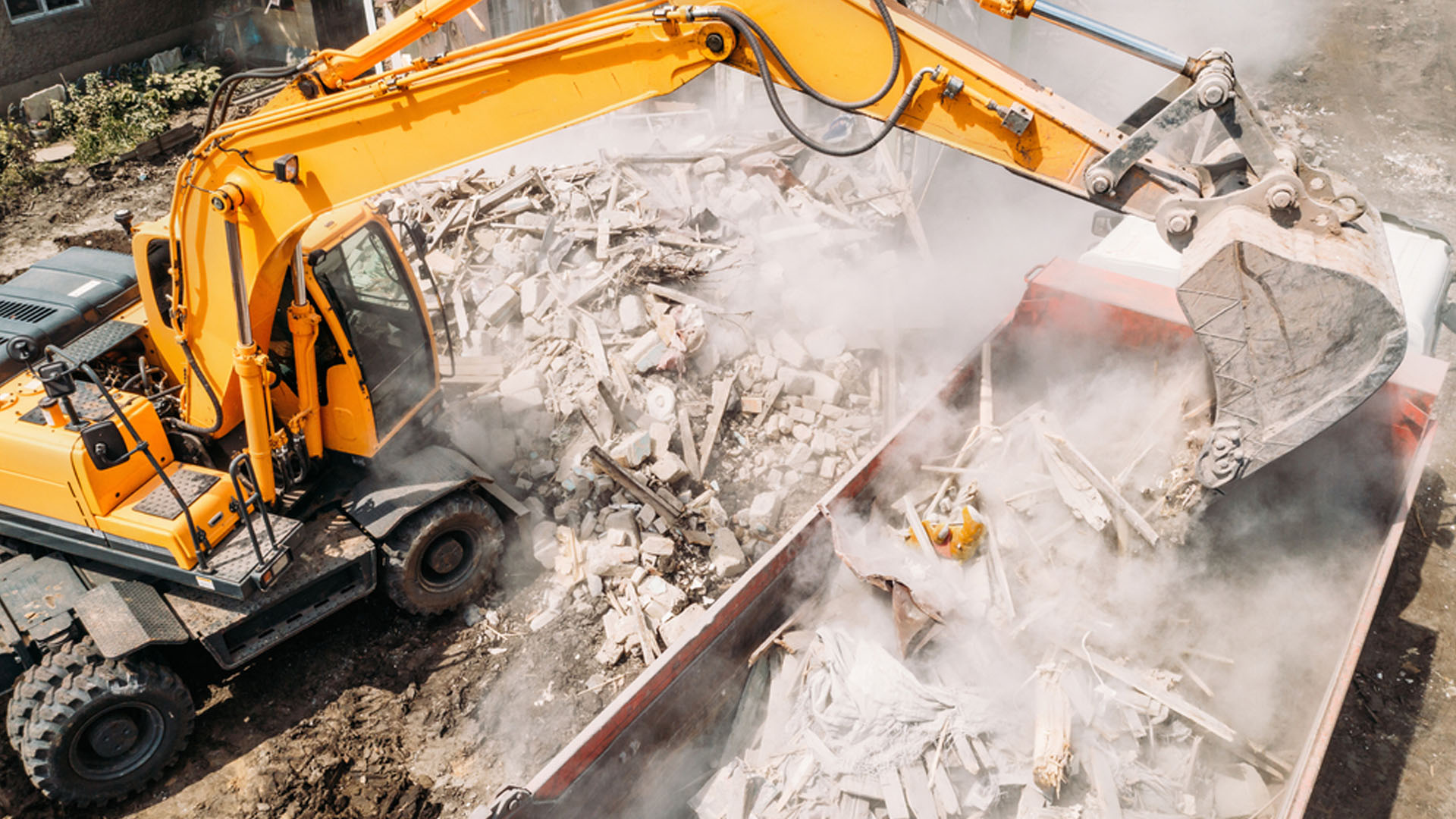
How to Cost Effectively Dispose of Construction Waste
Whether you’re paving roads, building skyscrapers, or renovating an existing structure, waste is an inevitable part of any construction project. According to the EPA, construction activities across the United States generated 600 million tons of waste in 2018, which is more than double the amount of solid waste generated by municipalities.
Not only do construction activities generate huge amounts of waste, a lot of that debris gets sent to landfills — 145 million tons in 2018, in fact. Because of the high costs of construction waste to the environment, as well as construction companies and their customers, safe and efficient construction waste disposal needs to be a key consideration for every contractor and site supervisor — from planning through to project completion.
Below let’s discuss 7 ways you can help save the environment, by properly managing construction waste.
1. Develop a Construction Waste Disposal Plan from the Start
Construction waste disposal needs to be considered well before materials arrive on site.
A waste disposal plan should evaluate:
- Which materials will be used and are most likely to become waste
- How waste generation will vary depending on the phase of the project
- How waste will be handled and stored on site
- How waste will ultimately be removed and disposed of
It should also clearly outline who is responsible for waste management and the protocols they will be expected to abide by and enforce.
Your waste disposal plan should be developed not only with efficiency in mind, but worker and environmental safety as well. Make sure that your plan is in line with all local, regional, and federal guidelines, along with any industry regulations or certification programs such as LEED. You can also set guidelines and goals for diversion or other desired performance indicators.
Execute Regular Waste Audits
Particularly for long-term projects, waste audits should be performed at regular intervals to ensure the construction team and subcontractors are adhering to the identified strategies and protocols. These reviews can serve to adjust the construction waste recycling and disposal plan as necessary, based on any changes to the project. They also help identify new areas of concern or opportunities for recycling or reuse that were not evident in the initial planning stages.
2. Perform Source Separation on-site
Source separation is the process of segregating waste by the type of material. This can create cost savings down the line and is better for the environment because the sooner it’s completed in the disposal process, the greater the likelihood that construction waste materials can be diverted from the landfill through reuse or recycling.
Unfortunately, this isn’t always the case on construction sites because it takes less time for workers to simply dispose of all materials in the same containers, there isn’t always enough storage space to store separated materials, and the handling and removal of source materials can be more time-intensive and expensive. Allocating your team the time and space for source separation and outlining who is responsible for it may take some additional time and expense on the jobsite, but ultimately leads to a more efficient and environmentally friendly process overall.
3. Clearly Outline Waste Disposal Responsibilities for Subcontractors
Subcontractor agreements should clearly outline the responsibilities that subcontractors have for waste produced on-site. Depending on the contract, they may be required to dispose of waste themselves or use on-site facilities and follow all existing procedures.
Regardless of where the responsibilities lie, clear communication of duties and protocols is important to ensure efficiency, worker safety, and adherence to environmental regulations.
4. Employ Waste Reduction Strategies
While a robust waste disposal plan is important, the best way to make this process more efficient is to minimize the amount of waste generated in the first place.
Strategies that can be used on a construction site to reduce waste include:
- Invest in your material management process to prevent waste from excess or damaged materials.
- Use deconstruction and selective demolition methods when appropriate for demolition projects.
- Use off-site construction when possible to minimize material handling, and the subsequent waste, on the project site itself.
- Plan for the reuse and recycling of materials in later phases of the project where possible.
Whether we like it or not, construction projects of all sizes generate significant amounts of waste. Planning for disposal long before shovels even hit the ground will help minimize the amount of waste produced in the first place, divert as much of it as possible from landfills, and bring down the costs of hauling and disposal.
Use the tips above to plan, recycle and sort your way to more efficient waste management no matter the size of your project.
Norita Contractors can help with faster truck dispatch
That dumpster isn’t going to empty itself! Construction material waste can pile up quickly on a busy jobsite, so you need to get it moving to its final destination.
Norita Contractors’ dump truck dispatch management software can speed up your waste disposal process through faster and easier truck dispatching, e-ticketing, digital invoices and more.
Request a free demo now to discover what Norita Contractors has to offer.
Reduce construction errors – Calculation mistakes leading to wastage are okay up to a certain threshold. If the crew is consistently using wrong measures, increasing the demand from clients for replacement, understand what is going wrong. That will save a lot of material from ending up in the trash.
Try out new building methods – Research has shown that replacing waste-generating plywood and lumber with the long-lasting modular metal forms to build concrete structures reduces waste significantly. Metal forms can be recycled and reused.
Reducing Your Construction Waste
Before you dispose of anything on your construction site, you should always consider which waste materials are reusable and recyclable. Keep in mind that the Waste (England and Wales) Regulations 2011 require businesses to confirm that they have applied the waste management hierarchy when transferring waste.
Reduce
Choose what you buy carefully. Meticulous planning will ensure that you don’t buy excess and/or unsuitable materials that end up in a landfill. For example, you can easily prevent unnecessary waste created by offcuts, such as from pipes and timber, by buying more appropriate sizes and lengths in the first place.
Reuse
Think about which leftover materials you can repurpose for another project, such as bricks, windows, roof tiles, etc. It’s also possible to pass materials on or exchange them with other construction sites, as well as join bring-back schemes. Some of these schemes allow you to return packaging to the original manufacturer, for example.
5. Order the Right Amount of Materials
– Make sure there is a comprehensive plan which specifies the needed amount of inventory before beginning construction. Use this planning to account for potential waste.
Plan ahead – Beginning with a clear mind of having separate sorting for different types of elements will eliminate additional hassles. The project manager should ensure a proper organization to be in place to reduce wastage of materials.
6. Recycle if not Reusing
– If you figure difficulty in sorting out trash, use easily accessible recycling equipment. Ask the workers to use recycling bind to segregate the waste effectively. Sinks, baths, countertops or metal, cardboard, paper, plastics, etc. should be recycled Tip: If this is a short term project, it’s better to lease or rent the equipment from your local waste management and recycling equipment provider company.
Importance of Recycling
- It reduces the need for more supplies – Working with a plan lets you know the precise amount of recycled material produced during the project. That will, in turn, reduce waste generation, and make the project cost-effective.
- Diminishes transportation and production costs – The more unplanned materials you order, the more it is going to cost you in terms of procurement and delivery. Recycling will save you from this trouble.
- Reuses waste – Isn’t it better if the scrap from one project is used as an adequate supply for another, rather than ordering a new batch? That saves the landfills from filling up, making the construction process sustainable.
What factors inhibit recycling?
- Absence of recycling equipment or facilities near the construction sites
- Inadequate usage of relevant technology
- Lack of awareness
7. Disposing of Your Construction Waste
If you determine that certain materials cannot be reduced or reused, then your remaining options are to recycle and/or dispose of them. The most practical and effective construction waste disposal method is to hire skips from a waste removal company. You should ensure that you hire the necessary number of skips to separate recycling and waste, as well as hazardous and non-hazardous waste.
You also need to create a classification description and waste transfer notes before you send off waste for recycling or disposal, which we’ll look at in more detail below.
Hiring Skips for Your Construction Waste
Before hiring skips for your waste, you should check with the Environment Agency that the waste collector has the correct licensing to carry waste. Disposing of waste at an unauthorized site could make you liable to pay Landfill Tax.
Furthermore, you should determine whether your skips will be sited on private land. Otherwise, you will need to acquire a skip permit from your local authority.
When deciding on what skips to hire, be aware that there are three different types:
- A small builder’s skip. This is 6 cubic yards / 6,000 kg (approximately 50-60 bin bags).
- A large builder’s skip. This is 8 cubic yards / 8,000 kg (approximately 60-80 bin bags) and is the most common size.
- A maxi skip. This is 12 cubic yards /12,000 kg (approximately 100-120 bin bags) and is usually used for larger works.
You should locate your skips in a suitable and safe location that workers can easily access. Furthermore, you should have clear signage, so workers can discard of materials in the appropriate skip, and provide them with PPE to minimize risks. For example, when handling glass waste, they must wear steel toe cap boots. Clear instructions and training are therefore vital.
How to Create Classification Descriptions
Before you can send off waste for recycling or disposal, you must create a classification description for it. This helps you decide how to handle the waste and provide the necessary paperwork to waste contractors.
Construction worker writing on a clipboard
A classification description must include:
- The waste classification code (as described earlier in this article).
- Whether or not it’s hazardous.
- The type of premises or business where the waste was produced.
- The name of the substance or substances.
- The process that produced the waste.
- A chemical and physical analysis.
Any special problems, requirements, or knowledge related to the waste.
For further advice, you can visit the government’s information page on classification descriptions.
How to Create Waste Transfer Notes
According to the government website, “For each load of non-hazardous waste you move off your premises, you need a waste transfer note or a document with the same information, such as an invoice.” You can either register online or download a waste transfer note to fill in on paper. Its purpose is to include further information about the waste you produced and clarify the transferal process.
Your business and the business collecting your waste both need to:
- Fill in the sections of the waste transfer note that apply.
- Sign it.
- Keep a copy for 2 years.
- Show it to an enforcement officer from your local council or the Environment Agency if asked.
For further advice or to download a waste transfer note, you can visit the government’s information page.
The law is clear about how you should manage and dispose of your waste on construction, demolition, and excavation sites. As long as you follow the processes outlined in this article and properly train everyone involved in handling waste, you can easily comply with the law, maintain safety, and dispose of waste sustainably.
Conclusion
Compliance. Under the Waste (England and Wales) Regulations 2011, it is a legal requirement for businesses to control their waste. This applies to those that produce, import or export, carry or transport, keep or store, treat, or dispose of waste.
High standards of health and safety. Proper waste handling and segregation will protect workers and members of the public from accidents. You’ll prevent materials from being left in inappropriate places. For example, where they could fall onto people or cause a trip hazard.
Reduced costs: Proper construction waste management reduces costs in multiple ways. You’ll reduce spending by reusing materials and you’ll prevent double costs, which refers to paying for a material that goes to waste and then paying again to have it removed.
Corporate social responsibility: Managing your waste will help you limit how much you generate and dispose of, as well as ensure it is properly processed once removed from your site. This will help to conserve our planet’s natural resources and minimize the energy required to transport and reprocess waste.
Improved reputation: Businesses that demonstrate they’re doing their part for the environment will develop a positive reputation, which improves their relationships with customers and clients. It can even help you gain opportunities with government-funded projects, which often require certain standards of waste management.
Improved company-wide awareness: When workers adopt safe, sustainable waste management practices at work, they may then feel compelled to apply these practices to other aspects of their work and their personal life.
The waste management hierarchy is as follows:
- Reduce.
- Reuse.
- Recycle.
- Dispose.
Now kindly fill in our contact form and let us know what construction you will need for us to do for you, knowing that Norita Contractors will take care of your waste responsibly saving our environment.